
New for 2026: Shockwave Therapy
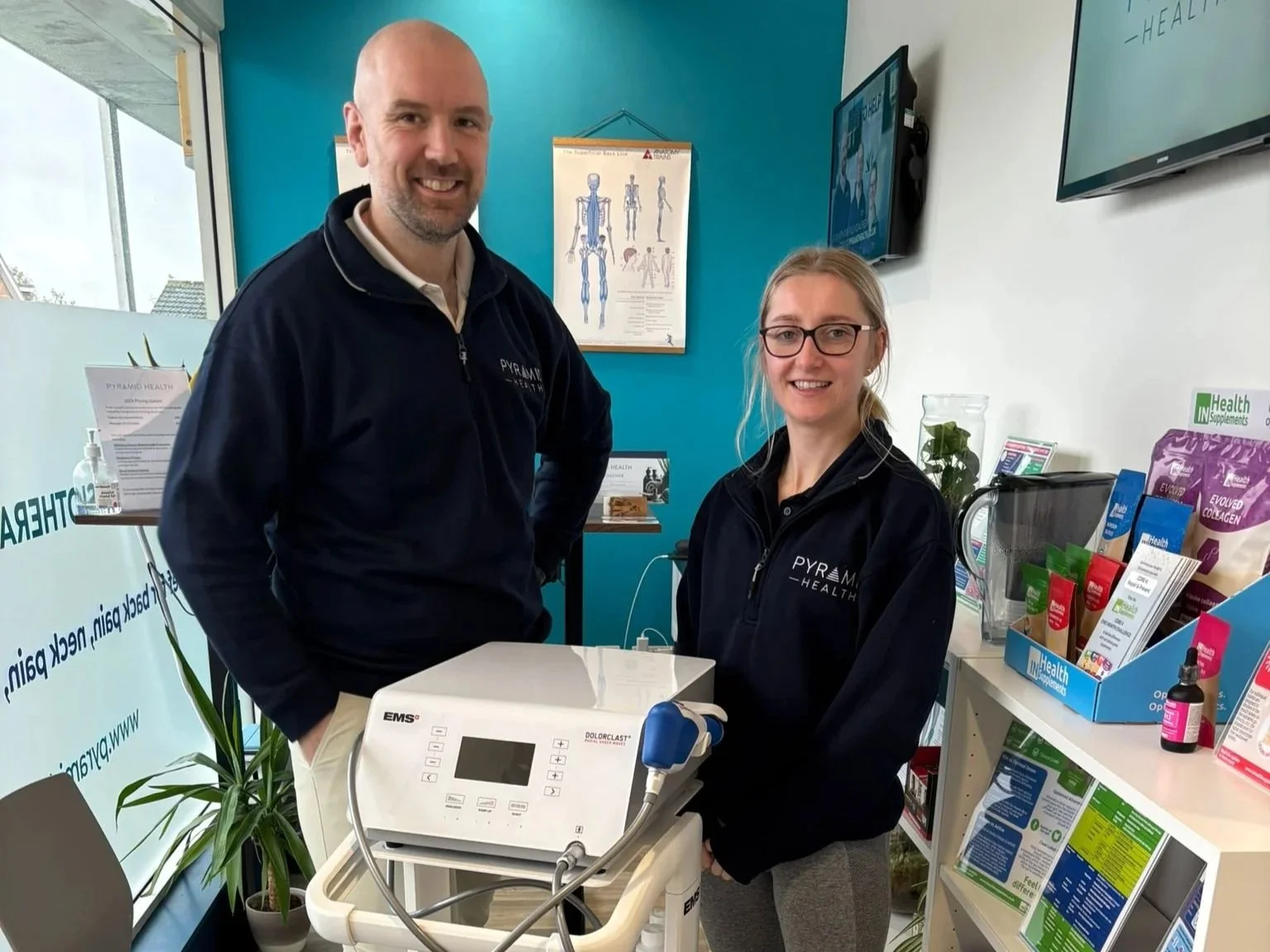
We've been talking about getting a shockwave machine for a while now. Probably too long, if we're honest. But we wanted to get the right one, and after a lot of research (and a fair bit of deliberation), we've finally taken the plunge.
So (drum roll)… Shockwave therapy is now available at the clinic!
Hooray! Wait… What is Shockwave Therapy?
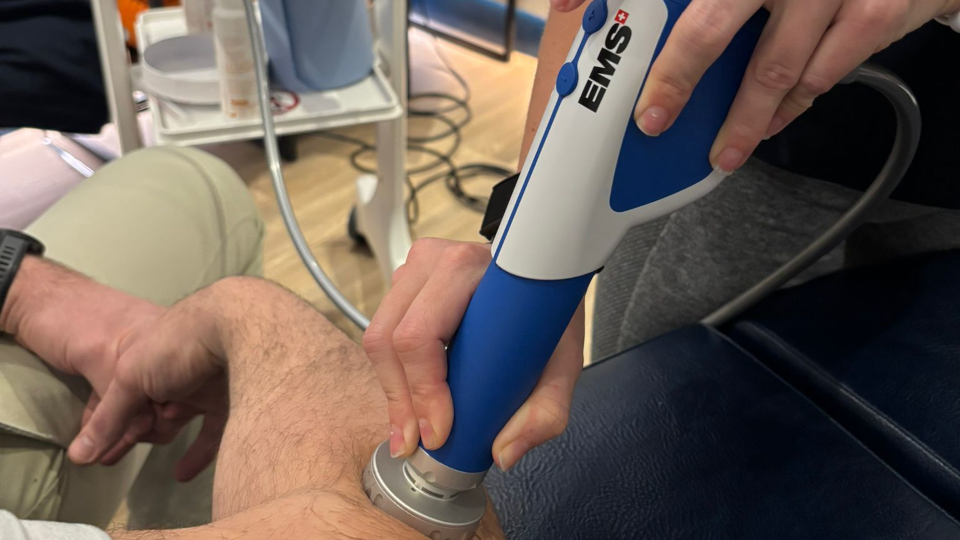
Extracorporeal Shockwave Therapy (ESWT or just Shockwave for short) uses high intensity sound wave pulses to stimulate healing in soft tissues. You sit or lie down, we apply the handpiece to the problem area, and the machine delivers rapid pulses of pressure into the tissue.
It feels like someone tapping you quite firmly. Over the tender bits, it can be uncomfortable; we won't pretend otherwise. But sessions are short, usually 10-15 minutes, and most people tolerate it fine (plus, we can vary the intensity to suit).
These pulses increase blood flow, trigger an inflammatory response (the good kind, the healing kind), and basically wake up tissues that have stopped repairing themselves. Tendons are notoriously slow healers because they don't have great blood supply. All the evidence suggest that Shockwave seems to help with that.
Why We Went With EMS Swiss DolorClast
Here's the thing about shockwave machines: they're not all the same. Some are brilliant. Some are, frankly, a bit rubbish.
We went with the EMS Swiss DolorClast system. It's not the cheapest option, but it is the most researched. EMS are the OG of Shockwave technology and more than half of all published clinical trials on radial shockwave use DolorClast equipment. And in about 80% of those studies across all kinds of injuries, there was a significant improvement.
There was also an independent bench test comparing different machines. The competitor lost up to 90% of its energy output at higher frequencies. The DolorClast lost about 18%. No other machine delivers the same level of the thing that matters most.
I'll admit, reading about shockwave physics isn't the most exciting way to spend an evening. But when we're investing in equipment that we'll use on patients, we want to know it actually works. We’ve bought the best of the best.
What Is Shockwave Good For?
As its use becomes more commonplace, Shockwave is being used for all sorts of things, from acute muscle strains to arthritic joints to (believe it or not) cellulite. You won’t find an elite sporting organisation without a Shockwave machine these days. But the evidence is strongest for chronic tendon problems. Things like:
Plantar fasciitis: That heel pain that makes your first steps in the morning feel like walking on broken glass. Studies show shockwave can work faster than conventional physio for this. Combine that with our market-leading Footscan technology & Phits 3D printed insoles and you could be saying goodbye to plantar fascia problems for good.
Achilles Tendon Problems: We see a lot of this. Runners, obviously, but also people who've just increased their walking or started wearing different shoes. Mid-portion injuries respond particularly well.
Tennis elbow or Golfer’s Elbow: Despite the name, most people who get this have never picked up a racquet or club. It's usually from repetitive gripping or computer work. If you've tried the exercises, the brace, the waiting, and you're still sore, consider a course of Shockwave.
Rotator Cuff Problems and Calcific Tendinitis: Calcific shoulders are actually one of the best responders. The shockwave seems to help break down those calcium deposits.
Patellar Tendon Problems: Common in runners, cyclists, anyone who loads their knees a lot.
It has also shown to be effective for Heel Spurs, Trochanteric Bursitis (or Greater Trochanteric Pain Syndrome / GTPS), IT Band Syndrome and a host of other persistent issues.
How Treatment Works
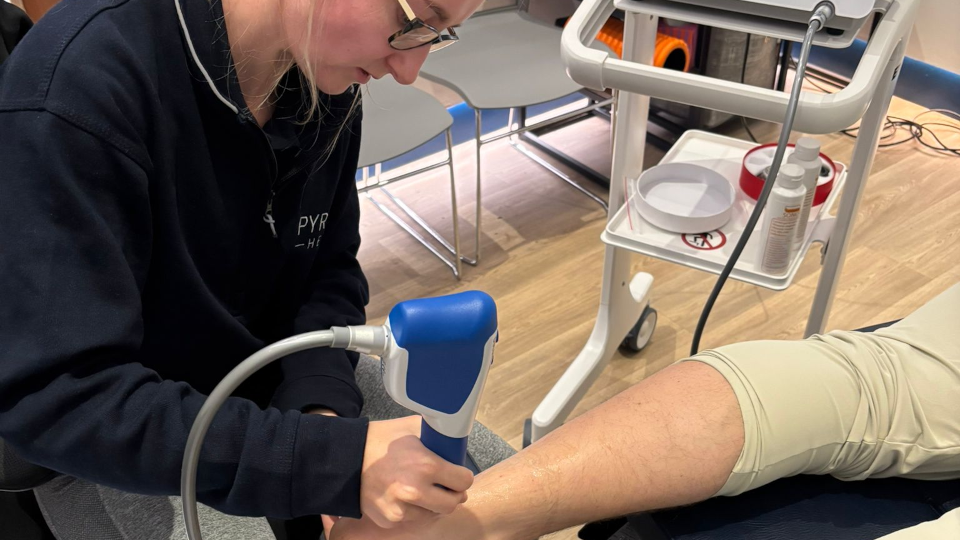
We don't do one-off sessions. The research is pretty clear that you need a course of treatments. For most conditions, that means somewhere between 6 and 12 sessions, usually a week apart.
You'll probably feel something after the first session. Maybe better, maybe a bit stirred up. By week two or three, most people start noticing genuine improvement. But the full effects can take a few weeks to develop even after the course is finished.
Is Shockwave Right For Me?
There are very few reasons not to have Shockwave Therapy. It’s quick, non-invasive and highly effective for a whole range of problems. There are a few situations (like being pregnant or having a clotting disorder) where Shockwave isn’t suitable - you can check for these on our Shockwave page.
Shockwave is best known for creating breakthroughs where other approaches have faltered. If you’ve had symptoms for at least six weeks and other approaches haven't fully sorted it, if you've done the exercises, had treatment, maybe even tried a cortisone injection, and you're still struggling, Shockwave is the best next step.
If you've tried other treatments, other practitioners, or even other Shockwave machines… Book your course of EMS Shockwave now: