
Shockwave Therapy
Effective treatment for stubborn, chronic conditions that haven't responded to other therapies.
What is Shockwave Therapy?
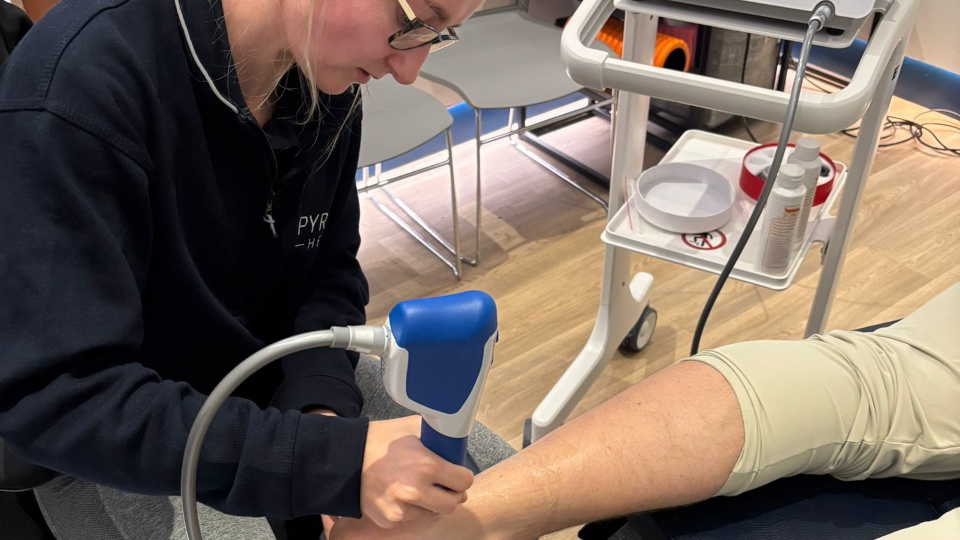
Shockwave therapy uses acoustic pressure waves to stimulate healing in damaged tissues. It's particularly effective for chronic conditions that have been slow to respond to conventional treatment.
The technology works by increasing blood flow to the affected area, breaking down scar tissue, and stimulating your body's natural repair processes. Think of it like jump-starting a healing response that's stalled.
Treatment is quick. Sessions typically last 10-15 minutes, and most conditions require 6-12 sessions spaced a week apart.
Who Benefits From Shockwave Therapy?
Shockwave therapy works well for people who have:
Pain that's lasted more than 6 weeks
Tried other treatments without lasting improvement
Tendon problems that keep coming back
Chronic conditions affecting their daily activities
It's particularly effective if you've been told to "just rest it" and found that rest alone hasn't solved the problem.
Conditions We Treat
Foot and Heel Pain
Plantar fasciitis (heel pain)
Achilles tendinopathy
Heel spurs
Elbow Conditions
Tennis elbow (lateral epicondylitis)
Golfer's elbow (medial epicondylitis)
Shoulder Problems
Calcific tendinitis
Rotator cuff tendinopathy
Frozen shoulder (as part of comprehensive treatment)
Hip and Knee
Greater trochanteric pain syndrome
Patellar tendinopathy (jumper's knee)
IT band syndrome
Other Conditions
Chronic muscle tension
Trigger points
Shin splints
What to Expect During Treatment
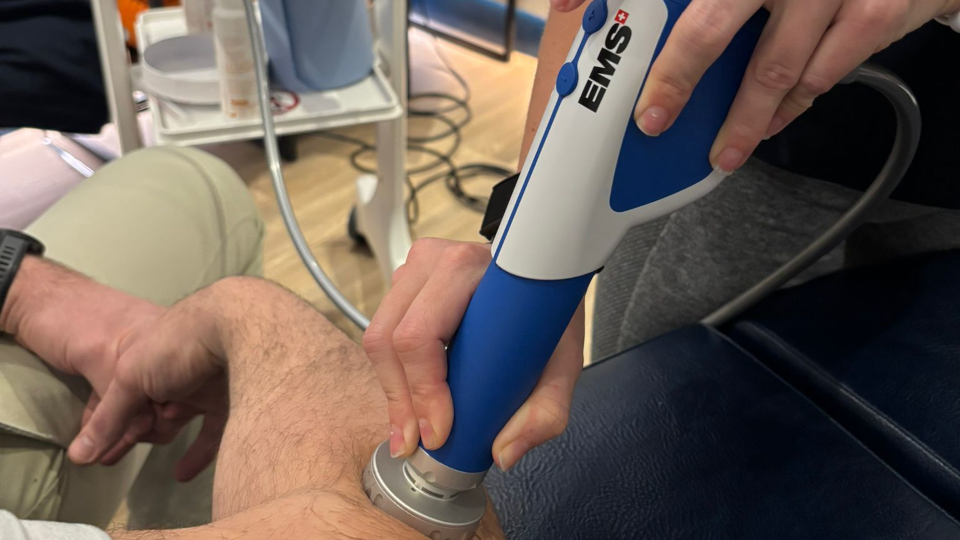
Before your session, we'll assess your condition thoroughly. Shockwave therapy works best when we understand exactly what's causing your pain. During treatment, we apply a handheld device to the affected area. You'll feel a rapid tapping sensation. Some people find this uncomfortable, particularly over tender areas, but the intensity can be adjusted to your tolerance.
After treatment, you may experience some temporary soreness or redness in the treated area. This is normal and typically settles within 24-48 hours. We recommend avoiding anti-inflammatory medications immediately after treatment, as the inflammatory response is part of the healing process.
Most people notice improvement after 2-3 sessions, though some conditions respond faster.
Why Choose Shockwave Therapy?
Shockwave is:
Non-invasive: No injections, no surgery, no downtime.
Evidence-based: Research supports shockwave therapy for plantar fasciitis, tennis elbow, and calcific shoulder tendinitis, among other conditions.
Fast sessions: Treatments take around 10 minutes. You can return to normal activities immediately.
Addresses the cause: Rather than masking symptoms, shockwave therapy stimulates actual tissue repair.
Works when other treatments haven't: Often effective for chronic conditions that have plateaued with conventional physiotherapy or rest.
Is Shockwave Therapy Right for You?
Shockwave therapy isn't suitable for everyone. We don't recommend it if you:
Are pregnant
Have a blood clotting disorder or take anticoagulant medication
Have a pacemaker or other electronic implant
Have an active infection in the treatment area
Have cancer in the treatment area
During your initial assessment, we'll review your medical history and let you know whether shockwave therapy is appropriate for your condition.
Frequently Asked Questions
Does Shockwave Therapy hurt?
You'll feel a strong tapping sensation during treatment. It can be uncomfortable over tender areas, but we adjust the intensity based on your feedback. Most people tolerate it well.
How many sessions will I need?
Most conditions require 6-12 sessions, typically spaced one week apart. We'll give you a clearer estimate after your assessment.
Can I exercise after treatment?
Light activity is fine. We generally recommend avoiding high-impact exercise on the treated area for 24-48 hours after each session.
Will it work for my condition?
The best way to find out is to book an assessment. We'll examine you, discuss your history, and give you an honest answer about whether shockwave therapy is likely to help.
Is shockwave therapy covered by insurance?
Most major insurance companies cover shockwave therapy. Check with your provider, or contact us and we can help you find out.
Ready to Get Started?
If you've been struggling with chronic pain that hasn't responded to other treatments, Shockwave Therapy can help. Book your New Patient Assessment or initial course of treatments now.

“When I found Mike I was crippled. I had pain in my achilles, knee, hip, groin, back, shoulder and neck... I'd seen various physios through work, none of which helped. I was trekking to Machu Picchu in two weeks and needed a miracle. He took on the challenge and I completed the trek as well as others I added on.
I have a very physically demanding job and now see Mike every few months to maintain health.”
— Carey