
“We Do That!” - Acupuncture & Dry Needling
There's a conversation we have most weeks in clinic. A patient has a muscle that will not let go. We've worked on it by hand, they've done their stretches, and it keeps tightening back up. We suggest needling. More often than not, the reply is: "I didn't know you did that here."
So this one is overdue. Acupuncture and Dry Needling are part of what we do at Pyramid Health, and we use them day in and day out. If tight, irritable muscle is part of your problem, needling can settle it faster than hands alone, and it costs you nothing extra on top of your appointment.
What Is Dry Needling?
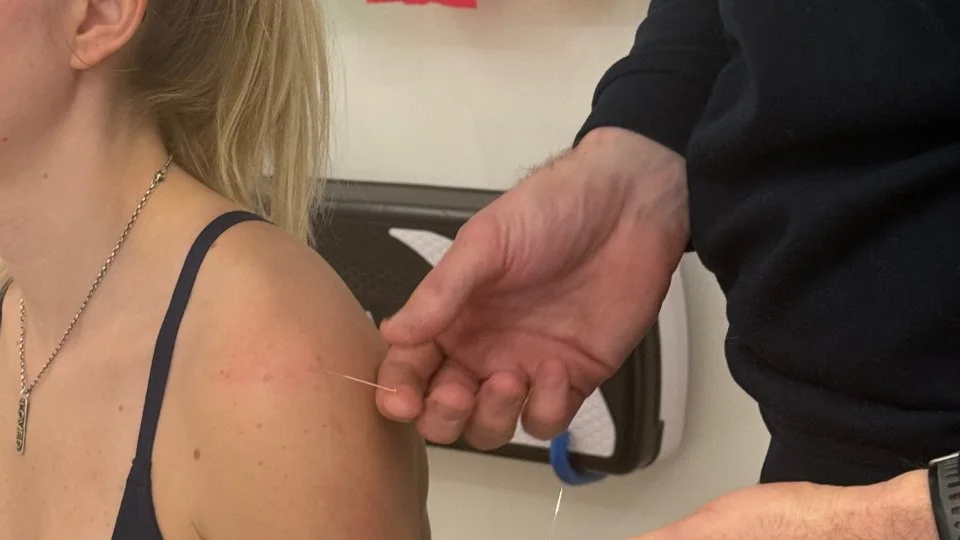
Dry needling uses a very fine, single-use needle to reach a trigger point. A trigger point is a tight, irritable knot inside a muscle that has stopped releasing on its own. It's the thing that keeps pulling a joint out of position however diligently you stretch.
"Dry" simply means nothing is injected. The needle itself is the treatment. It's the same idea as pressing a knot with a thumb, except a needle reaches tissue that a thumb can't, and it can be far more specific about where it goes.
When the needle finds the right spot, the muscle often gives a small involuntary twitch. That twitch is part of the treatment. It's the muscle letting go.
What About Acupuncture?
Traditional Chinese Acupuncture comes at things differently. Rather than hunting a specific knot, it uses points mapped out over a very long history of practice, with the aim of settling pain and calming down a nervous system that has become over-sensitive to it.
My approach is a blend between East and West. My training was an introduction to both philosophies and I use whichever is likely to help the person in front of me, often a bit of each in the same session. The needles are the same. The reasoning behind where they go is different.
Whichever approach we use, the aim is the same as everything else we do with our hands. Restore proper movement to the area so your body can get on with healing. Things that move properly tend to heal faster.
What Do The Needles Feel Like?
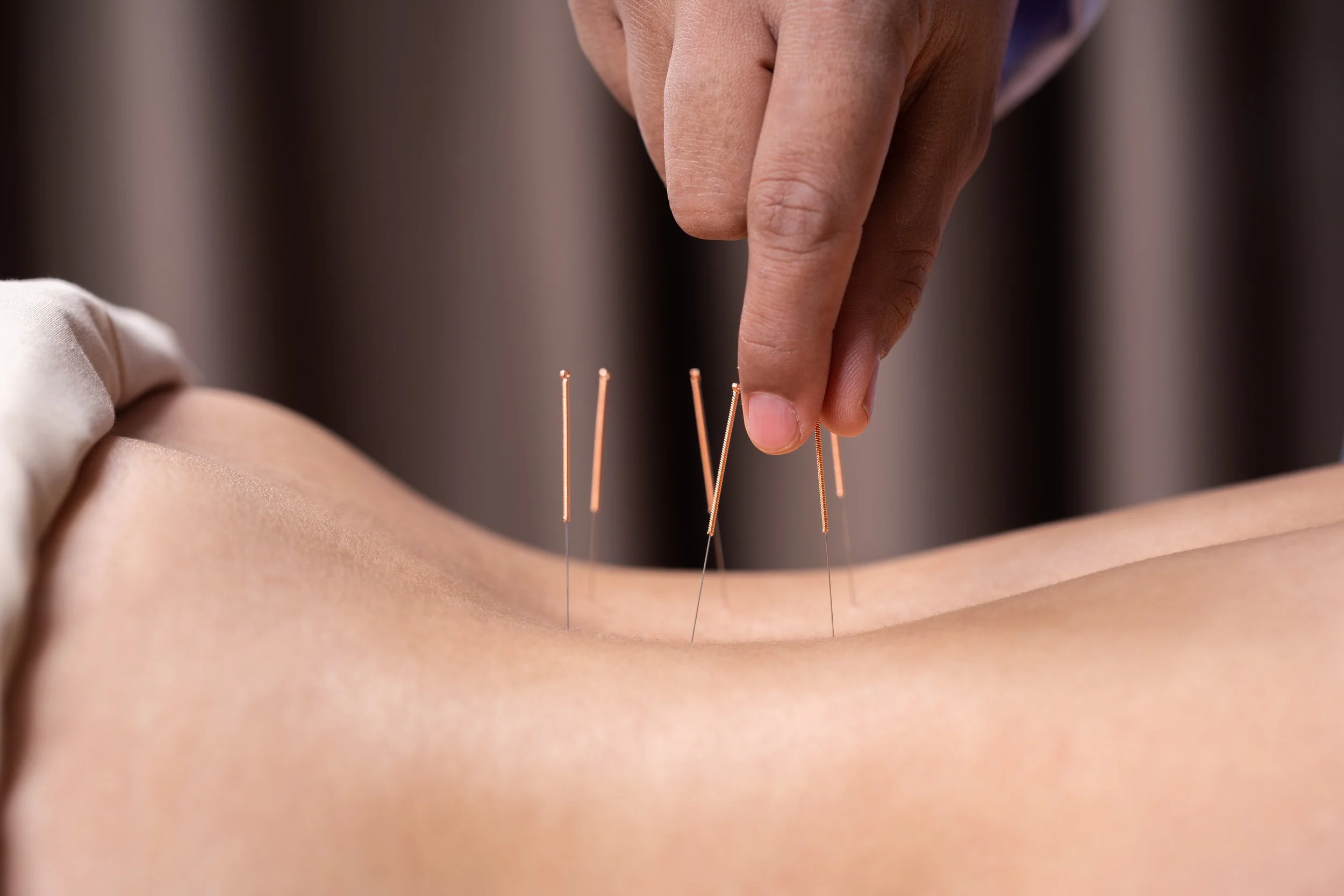
Most people are picturing the needle from a blood test. These aren't that. They're monofilament needles, far thinner, and most people barely register the insertion.
What you're more likely to feel is a dull, heavy ache while we’re working the tissue, or that brief twitch when a trigger point releases. Neither is sharp, and neither lasts.
Afterwards, you can expect some achiness in the area, a bit like the day after a good gym session. It sometimes doesn't arrive until a few hours later, so don't be alarmed if you leave feeling fine and stiffen up that evening. It will settle within 24 to 48 hours.
Needling isn't right for everybody, and it's always optional. We'll ask whether you've had it before, run through a short screening, and explain what we're planning to do. If you'd rather not, that's a complete answer and we'll use something else.
How We Use Acupuncture & Dry Needling
Needling is an addition to your treatment, not a replacement for it. It works best alongside hands-on care and the rehab exercises that stop the problem coming back. Where we find it most useful:
Stubborn neck and shoulder tension
Tension-type headaches
Low back pain, and sciatica-type pain referring down the leg
Pelvic girdle pain and pubic symphysis pain, including in pregnancy
Deep hip and buttock pain, particularly the piriformis muscle
Tight calves and hamstrings that keep re-tightening
Tennis elbow
Heel pain that won't shift
It's also a good option for patients who find hands-on massage or manipulation uncomfortable. We see this a lot with hip and knee arthritis, where the joint doesn't much fancy being moved but the surrounding muscle still needs help.
Who Uses Needling Therapies At Pyramid Health?
Three of us:
Mike Richards, chiropractor
Yasmin McIsted, chiropractor
Hannah Bolwell, sports therapist
So if you know that needling therapies work for you, you don't need to work out who to book with, or wait for a particular day of the week. Whichever of us you're already seeing, needling is available in your normal appointment if it's the right call for you.
Your Insurance Probably Covers It
Because needling is used inside your chiropractic or sports therapy session, it's covered by the same policy. If your insurance pays for chiropractic or sports therapy with us, it pays for the needling we do during those appointments too.
You don't need separate acupuncture cover. You don't need a different authorisation code. And there's no additional charge from us on top of the session you're already having.
Want To Try It?
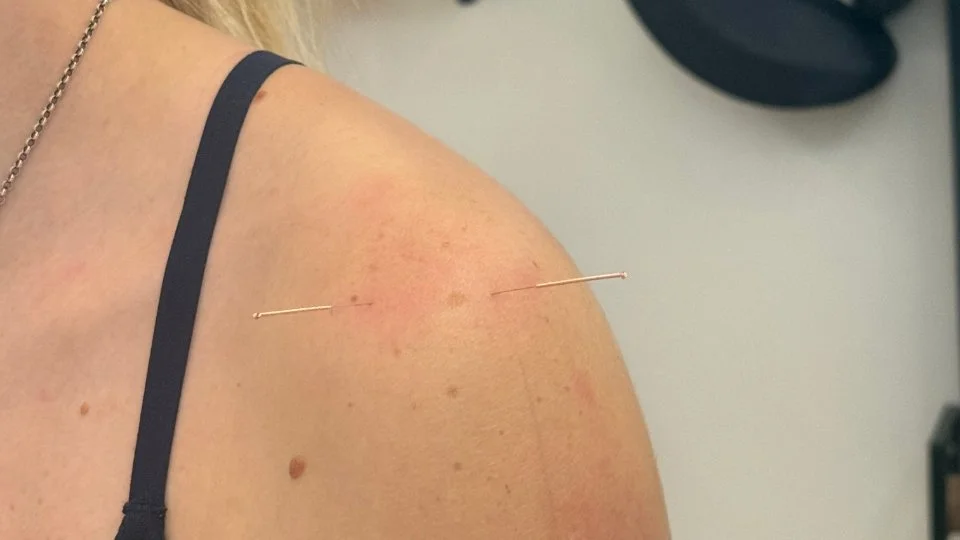
If you're already a patient, the easiest route is to mention it at your next visit. If it makes sense as part of your treatment plan, we’d be happy to introduce you to something different!
If you're new to us, you can call or book a New Patient Exam online and we'll assess the whole picture first.