
Chiropractor, sports therapist, massage therapist: it can be hard to know what the titles mean or what training sits behind them. Here we take a potted history of what our team studied, how long it’s taken to get here, and who we're registered with.
When you book with a new clinic, you're trusting someone with your body. It's fair to want to know what training they have. The trouble is that healthcare titles can be confusing, and some of them aren't protected at all. In the UK, almost anyone can call themselves a "therapist".
So we thought we'd lay it out plainly. Between the four of us we have around 15 years of full-time university training, and every one of us is on a professional register. We’ll dive deeper on what’s covered in our degrees and why you can count on our knowledge, character and expertise.
Chiropractors: A Title Protected By Law
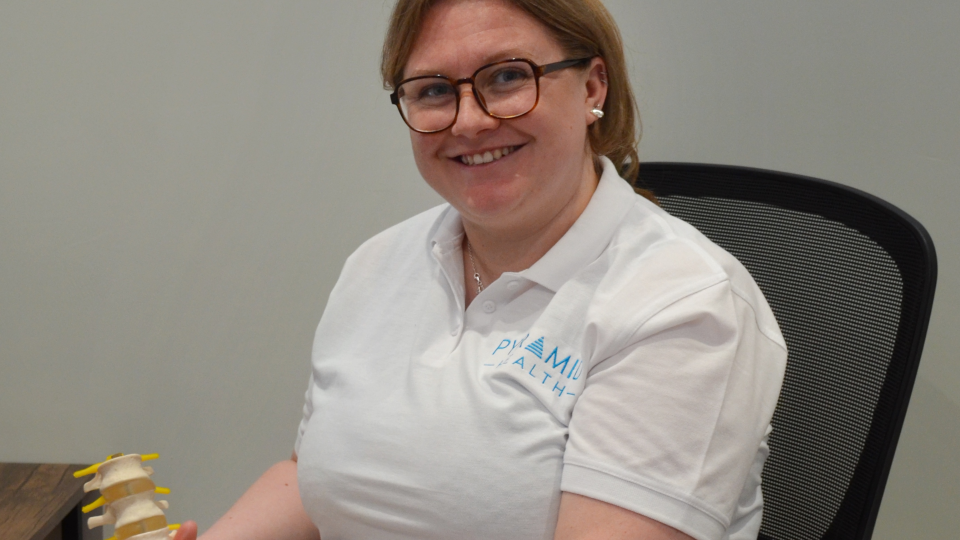
We sometimes say that chiropractors know a lot about a little bit (i.e. the spine), and a little bit about a lot!
"Chiropractor" is a protected title in the UK under the Chiropractors Act 1994. To use it, you must be registered with the General Chiropractic Council (GCC), the body that regulates the profession. Calling yourself a chiropractor without being registered is a criminal offence.
Getting onto the register means completing a recognised degree. Both Mike and Yasmin trained at the Anglo-European College of Chiropractic (AECC) in Bournemouth, which is now called Health Sciences University. They both hold the Master of Chiropractic (MChiro), a four-year master's degree accredited by the GCC and the European Council on Chiropractic Education.
Those four years cover a lot of ground:
The science of the body. Anatomy, physiology and neurology in depth, so a chiropractor understands how the whole body works, not only the spine.
Diagnosis. Taking a detailed medical history, examining patients and spotting the conditions that can mimic a muscle or joint problem. Chiropractors are "primary contact" clinicians, which means you can see one without a GP referral. That makes it essential to recognise when something needs a doctor rather than treatment, and to refer quickly.
Treatment and management. Hands-on techniques, exercise and advice, chosen to suit the individual patient and backed by the best available evidence.
X-Rays: Not many people realise this, but we’re also trained to take and interpret X-rays.
Research skills. How to read and judge scientific studies, so treatment keeps pace with the latest evidence.
Communication and ethics. Listening properly, explaining things clearly, keeping accurate records and treating patients as partners in their care.
The final year is spent in a teaching clinic, managing real patients under the supervision of experienced chiropractors.
And it doesn't stop at graduation. The GCC requires every chiropractor to complete at least 30 hours of continuing professional development (CPD) every year, and at least half of that has to involve learning with other professionals. Our recent trip to the Gait and Motion conference is one example of what that looks like.
Sports Therapists: Specialists In Injury And Rehabilitation
Sports therapy isn't regulated by law in the same way, which is why it matters so much who you see. A properly trained sports therapist will have a degree and be a member of a recognised professional body. Those bodies set standards of practice, require insurance and hold members to a code of conduct.
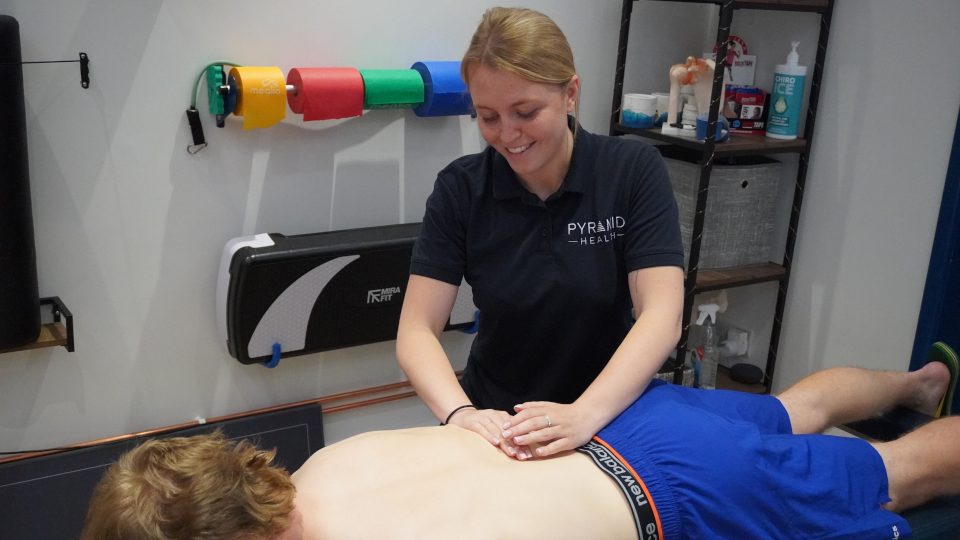
Hannah has a degree in Sports Therapy from the University of Worcester and is registered with the Society of Sports Therapists (SST). Abi has a degree in Sports Therapy from the University of Plymouth and a master's in Sport and Exercise Rehabilitation from Health Sciences University. She is registered with the Sports Therapy Organisation (STO).
Sports therapy degrees are built around the full journey of an injury, from the moment it happens to getting you back to what you love. The SST describes this in five areas of competency:
Prevention. Spotting the risk factors that make injury more likely and helping you reduce them.
Recognition and evaluation. Assessing an injury, including on the side of a pitch, and working out what's been damaged and how badly.
Management, treatment and referral. Hands-on treatment such as massage and soft-tissue work, and knowing when to refer you on to someone else.
Rehabilitation. Designing exercise programmes that rebuild strength, movement and confidence in stages.
Education and professional practice. Helping you understand your injury so you can look after yourself, while working safely and ethically.
These degrees involve hundreds of hours of supervised placement, often with sports teams and in injury clinics, so graduates have real hands-on experience before they qualify.
Abi's Masters degree goes further into rehabilitation. It covers advanced clinical assessment, the psychology of pain and recovery, and how to use research to shape rehab programmes. In plain terms, it adds extra depth to the part of recovery that often matters most: getting you strong enough that the problem doesn't come back.
Why A Mix Of Skills Helps You
Having chiropractors and sports therapists under one roof means we can look at a problem from more than one angle. A chiropractor might work out why your back keeps flaring up and get things moving again, while a sports therapist builds the strength and conditioning that keeps it settled. We talk to each other about shared patients, and if you'd benefit from seeing someone else in the team, we'll tell you.
We're also not afraid to say when a problem isn't for us. Part of everyone's training is recognising when you need a GP, a scan or a specialist, and pointing you in the right direction.
How To Check Any Practitioner
You don't have to take our word for it. You can search the GCC's online register for any chiropractor in the UK at gcc-uk.org. The SST and STO also list their members. Whoever you see, for whatever problem, it's always worth checking that they're properly qualified and registered.